
FAB FILM, FAB ALBUM
Author: Bruce Jenkins Date Posted:1 August 2025
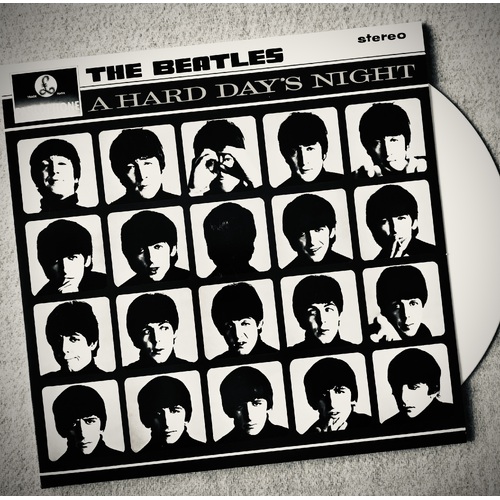
Released in July 1964, The Beatles third studio album marked several notable "firsts":
- It was a soundtrack LP—their first—sharing the title of their debut film A Hard Day’s Night.
- All the songs were Lennon-McCartney compositions.
- They hit the top of the Australian album charts for the first time.
Strictly speaking, A Hard Day’s Night is half film soundtrack, half other studio recordings. The quartet began filming in early March, with a cracking pace set by the production crew. In between stints on set, John, Paul, George and Ringo went into the studio to record songs for the film.
After Ringo unwittingly provided the film’s title, the band encountered an unusual challenge: writing a strong title song to open both film and album. John hurried home to start work. Somewhat stung by the massive success of Paul’s "Can’t Buy Me Love", Lennon was keen to match—or surpass—his friend and rival. With that electrifying opening chord, "A Hard Day’s Night" succeeded. The song was recorded over two days and provides, thanks to a great vocal from John, a thrilling opening for the LP.
"I Should Have Known Better" — Features John’s Dylanesque harmonica and a nice little guitar break from George on his new Rickenbacker. A similar sound and structure to the Lennon-McCartney songs on the first two albums.
"If I Fell" — John in a romantic yet anxious mood. Will you love me enough? Paul’s backing vocals are a highlight.
"I’m Happy Just to Dance With You" — George sings a lightweight Lennon song.
"And I Love Her" — Paul’s gentle love song to Jane Asher, with whom he was entwined at the time. Delight in the semitone key shift of George’s brief solo.
"Tell Me Why" — Written by John while the band were performing a residency in Paris, this is an upbeat, fun filler.
"Can’t Buy Me Love" — Closes the first, film-based side. It’s a glorious, timeless Paul rocker that topped singles charts around the world and ensured The Beatles place at the very peak of pop stardom.
Flipping over to the second side, we kick off with "Any Time at All", one of the last songs written for A Hard Day’s Night. This is an example of Lennon bringing an early draft into the studio and the band pitching in to create something energetic and memorable. Genuine teamwork.
"I’ll Cry Instead" — So short (1:44) you could easily miss it. John’s self-pitying lyric has an incongruously upbeat Country & Western melody. Perhaps that country flavour explains why it was released as a single in the US (where it crawled up to #25).
“Things We Said Today” — Here’s a Paul number that sounds like a John song. It has an almost ominous minor key melody that is underpinned by Ringo’s tight drumming. The middle eight modulation is delicious. This fabulous song highlights the duo’s increasing sophistication and signposts the road to Rubber Soul.
“When I Get Home" — A liberating John rocker.
“You Can’t Do That” — Belting along on a strong soul-pop rhythm, this is Lennon parading his toxic jealousy and possessiveness. Great tune, ugly lyric.
“I’ll Be Back” — The album closes with one of John’s most interesting early songs. Revealing both uncertainty and resilience, it manages to be upbeat and downbeat simultaneously before a quick fade leaves you leaning forwards, wanting more.
Listening to A Hard Day’s Night sixty-plus years later, you cannot help but be impressed by the growth and development of the Lennon-McCartney axis. John wrote all but three of the songs and although his voice is the dominant one across the record the band are collaborating in the studio to polish and refine. Yes, there are a couple of filler tracks, but the overall experience of excitement and energy is still palpable today.
© Bruce Jenkins—August 2025
