SHINING ON
Author: BRUCE JENKINS Date Posted:6 March 2026

Dark Side Of The Moon was a world-conquering album.Chart success was followed by a heavy touring schedule that left Pink Floyd rich, exhausted, and uncomfortably numb. After some uncertainty and meandering "writing" sessions, inspiration emerged from the things they knew: the band's own history and an industry slavering at the door, demanding to be fed.
The result was Wish You Were Here, an album of one extended piece (split roughly in half) and three shorter songs, two of which focus on the music biz. “Welcome to the machine” and “Have a cigar” are both Roger Waters pieces, snarling and snapping at the hand that fed the band. This fury would increasingly overwhelm Pink Floyd and define Waters subsequent career; here it is less savage than it would become—more mocking than lacerating. Oh, by the way, which one’s Pink?
The rest of the album has quite a different feel as it wanders through reflections on Floyd founder Syd Barrett’s psychological disintegration. “Shine on you crazy diamond” is a gently unfolding musical canvas of great charm and romantic sadness, Parts I–V opening the album and VI–IX closing it. Washes of melody and soaring guitar lines pulsate with regret and loss. Yet—almost surprisingly—the whole is uplifting, glorious even. “Shine on” is a beautiful and haunting elegy for a lost friend.
That sense of grief and loss is also present in the title track, the yearning “Wish you were here”. The song distils the album’s themes into five unadorned minutes: acoustic guitar, a fragile vocal from David Gilmour and lyrics that blur the line between tribute to Syd and a broader meditation on emotional disconnection. Its simplicity is deceptive. Framed by radio static and subtle production detail, it feels intimate and universal at once, which helps explain why it has become one of Pink Floyd’s most enduring and widely admired songs.
Half a century on, Wish You Were Here endures because its concerns have intensified rather than diminished. In the era of streaming, alienation from an industrialised music culture now reads as prescient, not speculative. The critique of corporate mediation between artist and audience feels contemporary rather than period-specific. More significantly, the emotional core—grief for Syd Barrett and by extension, for lost innocence—transcends context. The album is much less about the 1970s music industry than about disconnection.
The sound design also ages well: analog warmth, unhurried pacing, and a subtle dynamic range offer an antidote to compressed modern production. Critically, it occupies a sweet spot in the Pink Floyd catalogue—less conceptually rigid than The Wall, more emotionally compassionate than Animals, and more cohesive than their pre-Dark Side explorations. Here the talents of Roger Waters, David Gilmour, Richard Wright and Nick Mason genuinely pooled together for probably the last time, connected by the ghost of their former bandmate. Year after year new listeners discover a connection to Wish You Were Here, floating on its wistful beauty and recoiling from its righteous anger.
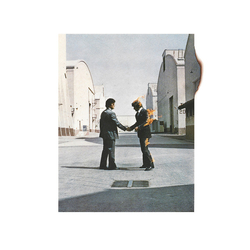
Recent reissues have included limited edition coloured-vinyl pressings that revisit the cover’s iconic burning-man imagery. The so-called “flame” or orange/red variant links directly to the original Hipgnosis cover concept, visually echoing the handshake engulfed in fire. These editions use the modern remaster prepared during the 2011–2016 archival campaign so collectors will not discover a radically new mastering but rather,a striking cosmetic variation. The appeal is symbolic as much as sonic: the vinyl colour embodies the album’s central metaphor of getting burned in the exchange between art and commerce. It’s a contract that still applies… buy this classic album and be enriched by its timeless artistry.
© Bruce Jenkins—March 2026