DO ANDROIDS SING?
Author: BRUCE JENKINS Date Posted:14 November 2025

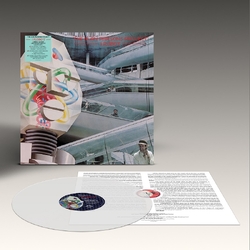
Released in June 1977, The Alan Parsons Project’s I Robot was the second album by audio engineer Parsons and his songwriting partner Eric Woolfson, and their first for Arista Records. Conceived by the pair as a meditation on artificial intelligence and the erosion of humanity, it was loosely inspired by Isaac Asimov’s I, Robot science fiction stories, although direct adaptation rights were unavailable. (They circumvented this road block by simply removing the comma from Asimov’s title.) Woolfson reframed the concept in philosophical terms: the rise of machines as a mirror of human ambition and limitation.
Recorded at Abbey Road with an ensemble of session musicians, the album fused progressive rock’s structural ambition with the polished production and accessible melodies that became the Project’s hallmark. In essence, they loved keyboards and a good tune.
Musically, I Robot blends electronic textures with orchestral colour and pop sophistication. The instrumental title track opens with wordless vocoder-treated voices and a pulsing synthesizer pattern that evokes mechanical consciousness coming to life. “I Wouldn’t Want to Be Like You,” sung by Lenny Zakatek, introduces a funk-inflected groove under bright, compressed guitars—an early example of Parsons’s ability to reconcile high-tech sound design with commercial clarity. The haunting “Some Other Time” and the delicate “Don’t Let It Show” showcase Woolfson’s melodic sensitivity and Parsons’s layered arrangements. “Breakdown"—featuring Allan Clarke of The Hollies—builds from robotic rhythm to gospel-like release, symbolising the tension between control and emotion. The mixture of analog synths, live orchestration, and multi-layered choral textures—particularly on “Genesis Ch.1 V.32”—illustrates Parsons’ mastery of the studio as a compositional instrument. His audio engineering work with Pink Floyd certainly enriched his musical vision and did his CV no harm at all.
In I Robot one can hear obvious Dark Side of the Moon influences, but also Rick Wakeman (Journey to the Centre of the Earth), some ELO, the funk of Average White Band (that infectious groove running through "I Wouldn’t Want To Be Like You") and of course the insistent sequencer lines of Giorgio Moroder/Donna Summer (I Feel Love). It adds up to I Robot finding a place at the nexus of Dark Side-style conceptual rock, ELO’s orchestrated pop, funk’s rhythmic discipline, and Moroder’s machine pulse—a synthesis that helped define the sleek, well-produced sound of late-1970s studio art rock.
A critical and commercial success, I Robot reached the Top 10 in both Australia and the USA and produced a hit single (“I Wouldn’t Want to Be Like You”). It established The Alan Parsons Project as contemporary leaders in crafting studio-based concept albums, bridging the gap between the narrative depth of progressive rock and the immediacy of mainstream pop. The record’s exploration of technology, automation and alienation resonated strongly in the emerging computer age of the late 1970s, while its production values influenced a generation of engineers and producers.
That was then and this is now. I asked an AI program for a one-sentence statement of how I Robot is seen in 2025.
"Today, I Robot stands as a fine synthesis of art-rock sophistication and radio-friendly precision—a meticulously crafted reflection on the machine within the human, and the human within the machine."
Does’t that make you feel just so confident about the future?
© Bruce Jenkins—November 2025