MAIDEN AT THE CROSSROADS
Author: BRUCE JENKINS Date Posted:6 February 2026
By 1990 Iron Maiden were an institution. During the 1980s they developed from the raw, punk-adjacent energy of Iron Maiden (1980) and Killers (1981) through the genre-defining peak of The Number of the Beast (1982), and on to the increasingly ambitious albums of the mid- to late decade. Powerslave (1984) and Somewhere in Time (1986) expanded scale and atmosphere; Seventh Son of a Seventh Son (1988) was their most overtly conceptual work, dense with synthesisers and layered production. It was also the end of Maiden’s imperial phase. No Prayer for the Dying arrived two years later as a conscious course correction: guitarist Adrian Smith had departed, Janick Gers joined, and the band publicly framed the album as a deliberate “back to basics” response to what they saw as musical excess.
Historically, then, No Prayer for the Dying sits awkwardly. It follows one of the band’s most polished and imaginative records, yet intentionally strips things back. Martin Birch’s production is drier and less expansive; the songs are shorter, the arrangements more direct. Maiden were attempting to reconnect with their early street-level aggression at a time when heavy metal itself was fragmenting: thrash metal had crested, glam metal was losing credibility, and alternative currents were beginning to surface. In that context, No Prayer sounds less like a bold reinvention than a cautious pause.
Yet there are moments where the album shines on its own terms. Opener “Tailgunner,” is a structural cousin to “Aces High;” its’ relentless tempo and martial rhythm establish clear intent. “Holy Smoke” injects overt satire, with Bruce Dickinson taking aim at televangelism in a way that recalls the band’s early irreverence. “Public Enema Number One” and “Fates Warning” showcase Iron Maiden functioning as a tight, muscular unit, driven by Steve Harris’s bass rather than layered ornamentation. The closing track—that gave the album its title—is often singled out by fans as the album’s high point: brooding, restrained and genuinely ominous, it hints at the darker atmosphere the band would revisit later in their career.
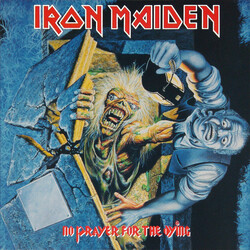
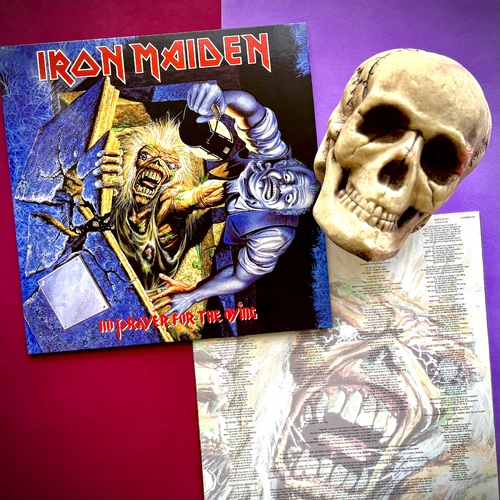
Visually, No Prayer for the Dying also marked a tonal shift. Derek Riggs cover art presents Iron Maiden’s totemic undead mascot not as a heroic or mythic figure but as a lurking, malign presence. Eddie is clawing his way out of a grave, his colour-soaked image so much more vivid than the washed out victim who may soon occupy the plot. The imagery aligns with the album’s stripped-down presentation and stands in stark contrast to the cosmic and fantastical themes of Somewhere in Time and Seventh Son. Iron Maiden remained acutely aware of the importance of iconography in shaping their identity.
Critical reception at the time was muted and subsequent reassessments have largely reinforced that view. Reviews frequently cited songwriting that was a little undercooked, a flat production aesthetic, and a surprising reduction in energy from a band known for intensity. Among fans, No Prayer for the Dying remains divisive rather than derided. Many defend it as an underrated, honest heavy metal record while others see it as a sign of creative uncertainty, a transitional work short on the hooks and ambition that once defined Iron Maiden. It rarely ranks among favourites, but is not without advocates.
Ultimately, No Prayer for the Dying neither redefines Iron Maiden nor seriously diminishes their legacy. It is a solid, often engaging album that feels smaller than both its immediate predecessors and the band’s own reputation. Newcomers should consider starting with The Number of the Beast or the progressive metal of Powerslave. These offer more imposing doorways: urgent, melodic, and historically decisive. No Prayer for the Dying may be better approached later, heard as a document of a great band pondering its next move.
© Bruce Jenkins—February 2026