ATLANTIC SD 7208
Date Posted:17 September 2025
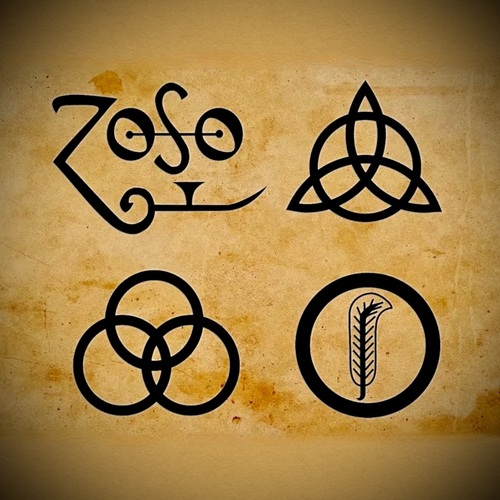
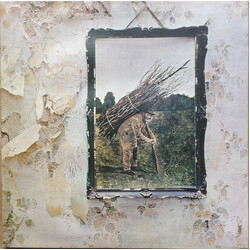
Welcome to the quintessential early-70s album experience. It begins when you pick up the record. You are holding a cover devoid of data; no words, numbers or indeed any identifying hieroglyphics. An old man with a bundle of sticks on his bent back stares dolefully out of a chipped picture frame hung on a decrepit wall. Turn over the front cover and the perspective shifts. That wall is part of a demolished house with more deteriorating dwellings and an ugly high-rise residential block in the background. Leaden skies and urban entropy. No whiff of magic here, just the stink of decay. But when the gatefold opens it grants entry into a quite different world. A robed, lantern-bearing elder stands atop a rocky mountain, gazing down at a struggling pilgrim seemingly stranded in the barren foothills. This is a scene straight out of heroic fantasy, a world of wizards and heroes where hidden meanings flicker at the edge of darkness. Hold the opened cover next to a mirror and you will see… what? A black dog? A demon?
Maybe it’s time to play the record.
Opening with a five second audio snippet that could be a tape deck starting up, a woozy bass note and some distorted guitar wicka-wicka, the music begins with the unaccompanied voice of Robert Plant commanding our attention.
"Hey, hey Mama, said the way you move
Gonna make you sweat, gonna make you groove"
The one-two salvo of “Black Dog” and “Rock and Roll” is an extraordinary beginning; the former’s writhing rhythms and the latter’s joyful teenage simplicity leaving you breathless. Indeed, you are still picking yourself up off the floor when the folk-infused magic of “The Battle of Evermore” transports you to a place where all that glitters is, indeed, gold. Sandy Denny—recently departed from UK folk-rock royals Fairport Convention—was the perfect choice for the female voice. She gives no quarter to Robert Plant and lifts the mythic energy into a new, rarified zone. This is no passive maiden lounging on the lawn. Denny is a prophet, a messenger, a vital counterpoint to Robert Plant’s storyteller. Greeted with confusion and disdain for their folk-mythological pretention on previous album III, this fabulous song was Zeppelin’s best of all possible responses. And to ram home the band’s declaration that they are about the spiritual just as much as the carnal, the next song isn’t bad either. It’s called “Stairway to Heaven” and is worth a listen if you are unfamiliar with its hypnotic spiralling transcendence.
The second side of the album is not as lauded, but just as satisfying. Bass player John Paul Jones displays his keyboard skills on “Misty Mountain Hop” (apparently a drug lyric; who’d have thought?) while the title of “Four Sticks” references drummer John Bonham’s doubling up of his beaters to increase power. “Going to California” is an acoustic song dripping with early Seventies sentiments; it’s pretty, smells heavily of patchouli, and cleanses the palette (sonically speaking) for the thunderous finale, Memphis Minnie’s “When the Levee Breaks”1. Here, in the final scene of this vivid tapestry, we again hear how central the drum kit is to Led Zeppelin. John Bonham, observes Eric Davis, "is not primal, but primeval."2 His massive, thundering beats drive this electric blues to a conclusion situated not at the apex of some celestial staircase but rooted in earthly elements and the power of nature.
No better rock album preceded Led Zeppelin’s fourth LP, and precious few that followed can compete with its complete mastery of power and finesse. This record is an irrefutable reason to buy a good turntable and decent speakers.
*
1. Memphis Minnie was a 1920s blues singer of great significance. Her adoption of the electric guitar, for example, occurred over a year before Muddy Waters plugged in. Although the Zeppelin tune is different, Plant lifts most of the lyrics from Minnie’s version.
2. Davis’ 33⅓ monograph on the album is a well researched and thoroughly entertaining read, despite expending much energy (and pages) fretting about the occult interests of Jimmy Page while giving far too much credence to a breathless, born again American writer (Thomas Friend) myopically gazing at pagan Britain through the foggy window of conservative Christianity.
*
© Bruce Jenkins—September 2025
Comments (1)
Hey Hey Marmoset
By: SteveForTheDeaf on 19 September 2025I agree on this record’s irrefutable-ness. Equals may exist but no finer